Ahead of the next general election cycle, a coalition of policy experts and diaspora advocates has thrown its weight behind electronic transmission of election results—but with a critical distinction: technology deployed for commerce must not be confused with the infrastructure required for credible democracy. In a joint position paper released in Abuja, the Centre for Contemporary Studies (CCS) and the Nigeria Diaspora Coalition for Change (NDCfC) argue that while electronic transmission is necessary, its current framing has missed the core issue. “Election data is not the same as POS, WAEC or JAMB traffic,” the statement reads. “Those systems process transactional or institutional records whose failure causes inconvenience; electoral data carries constitutional authority whose compromise affects sovereignty.” The intervention marks a significant shift in the ongoing debate over whether results from polling units should be transmitted electronically. Rather than taking sides in the familiar polarisation, the groups have called for a forensic approach to system integrity. They warn that data is vulnerable throughout its lifecycle—at rest, in use, and in motion—and that credible electoral architecture must protect all three stages simultaneously. Without that, they argue, electronic transmission merely relocates distrust instead of eliminating it. The paper acknowledges concerns from sceptics who question the security of transmitting sensitive electoral data over the public internet. However, it clarifies that proponents of electronic transmission are not arguing that the internet is inherently safe, but rather that verifiability is safer than discretion. The groups propose a layered security model: device-level signing, end-to-end encryption, hash verification, mirrored servers, and immutable audit logs. “The goal is not secrecy of the data, but immutability of the record,” they write. “Even if seen, it must not be alterable without detection.” On the national security front, the paper concedes that election data is indeed attractive to both state and non-state actors. Yet it points out that Nigeria’s historical vulnerability has not been remote cyber intrusion, but human interception during physical collation. “The question, therefore, becomes comparative risk: centralised cyber manipulation versus distributed human manipulation. Neither is impossible; one is easier to prove.” Crucially, the CCS and NDCfC caution against turning electronic transmission into a “do or die slogan.” Technology alone, they insist, cannot cure electoral distrust. “Without institutional independence, transparent auditing, and rapid judicial resolution, technology becomes theatre. But without verifiable transmission, every other reform still collapses at the collation stage.” Their proposed solution avoids both blind adoption and indefinite hesitation. Instead, they call for mandatory demonstrable assurance: the Independent National Electoral Commission (INEC) should publicly test, certify, and expose the transmission system before the election—not defend it after. “The argument should shift from ‘trust the technology’ to ‘verify the evidence’,” the paper concludes.
NDCfC Urges President Tinubu to Respond Firmly and Wisely to Trump’s Threat, Calls for Diplomacy Anchored in Strength
The Nigeria Diaspora Coalition for Change (NDCfC) has called on President Asiwaju Bola Ahmed Tinubu, GCFR, to respond to recent remarks made by U.S. President Donald J. Trump with firmness and strategic restraint, emphasizing that reckless rhetoric must not be met with reckless reaction. Recall that on November 1, 2025, Mr. Trump posted a statement on Truth Social threatening to halt U.S. aid to Nigeria and to consider military action “guns-a-blazing” if the Nigerian government “continues to allow the killing of Christians.” NDCfC described this as an alarming breach of diplomatic decorum and a dangerous precedent in international relations, a statement by Dr LaBode Obanor, CSO NDCfC noted. “Nigeria must defend her sovereignty, but she must do so with the discipline of a nation secure in its legitimacy’’, Obanor stated. ‘‘No sovereign nation should capitulate or submit to sabre-rattling. The response must combine clarity of principle with maturity of statecraft.” The coalition commended the Federal Government’s initial response, which reaffirms Nigeria’s constitutional guarantees of religious liberty and its engagement with faith leaders across all divides. However, NDCfC reminded the Tinubu administration that the primary and non-negotiable duty of any government is the protection of its citizens, adding that successive administrations, including the current one, have failed to uphold this fundamental constitutional obligation. ‘‘The persistent killings, abductions, and displacement of civilians, Christian, Muslim, and others, reflect a dangerous collapse of state capacity and political will. It is therefore imperative, not optional, that President Tinubu’s government act decisively to secure every Nigerian life and restore confidence in the rule of law. Until Nigeria proves capable of protecting its own people, claims of sovereignty will ring hollow before the world. “The true measure of sovereignty is justice applied without bias. Every Nigerian life is sacred, and our credibility abroad begins with fairness at home’’, the Coalition said. NDCfC Called on the Federal Government to: What the U.S. could do. Rather than resorting to confrontation or the language of invasion, the United States could play a vital and constructive role in addressing the insecurity that fuels these tragedies. Washington can redirect its engagement toward intelligence cooperation, capacity-building, and reform of the justice system-providing actionable intelligence on terrorist financing, arms trafficking, and extremist networks operating within and around Nigeria. It can expand training and logistical support for Nigerian security forces under strict human rights compliance, assist in rebuilding local policing, drones, and early-warning systems, and invest in community reconciliation and humanitarian relief programs for displaced persons. The U.S. can also leverage its global influence to strengthen multilateral counterterrorism coordination through the United Nations and African Union, ensuring that all interventions comply with international law and protect the dignity of Nigerian lives. Partnership, and not provocation, remains the only credible path to lasting peace. The coalition stressed that Nigeria must demonstrate moral consistency by taking decisive steps to address insecurity and protect vulnerable communities across the country, including in the northeast, where both Christians and Muslims have faced grave violence. “Nigeria cannot demand respect for her sovereignty while appearing indifferent to the safety and dignity of her people. Our rhetoric must match our commitment to protecting every Nigerian life’’, it emphasized. NDCfC said it views this episode as a test of Nigeria’s regional and global stature and reaffirmed its solidarity with the Nigerian state, urging a response that combines strength, diplomacy, and strategic composure befitting Africa’s largest democracy. “Nigeria must be seen to act with sincerity and integrity in its dealings with stakeholders and other international partners. The Tinubu Administration should use this moment as an opportunity to deal with insecurity and anyone found to be involved with supplying arms and or financial support “This moment calls for courage, clarity, and a steady hand. Nigeria must lead with strength, and also with wisdom”, the Coalition emphasized.

NDCfC Celebrates Prestigious Academic Appointments of Prof. Gold and Prof. Orbih
The Nigerian Diaspora Coalition For Change (NDCfC), has celebrated the prestigious academic appointments of two of its eminent members: Prof. Mondy Gold and Prof. Charles E Orbih, by Edsea Business School in collaboration with Haggai International Bible College. EBS HIBC College of Divinity, a joint institution affiliated with West Midlands Open University, Lagos, Nigeria, and Open Christian University, USA, appointed Prof. Mondy Gold as Deputy Pro-Chancellor. His appointment underscores his longstanding commitment to advancing theological education and strategic leadership in faith-based institutions. With this recognition, Prof. Gold will contribute significantly to the global academic and spiritual discourse, expanding the reach and relevance of divinity education. The School of Entrepreneurship and ICT Innovation at EBS HIBC appointed Prof. Charles E. Orbih to the Professorial Chair. A renowned thought leader in innovation and enterprise development, Prof. Orbih’s appointment positions him to drive transformative learning at the intersection of technology and entrepreneurship. His role will foster a new generation of innovators across Africa and beyond, aligned with global development goals. These appointments not only elevate the personal profiles of both scholars but also mark a strategic win for the NDCfC, reinforcing its influence and thought leadership across academic, entrepreneurial, and spiritual landscapes. The visibility and recognition granted through such affiliations create expansive opportunities for international partnerships, mentorships, and academic collaborations, reflecting NDCfC’s mission to nurture excellence and impact across the diaspora. Prof. Olu Osadolor Kotoye, Director-General of Edsea Business School, affirmed the appointments as part of a broader vision to align academia with kingdom-driven leadership and societal transformation. NDCfC celebrated these milestones as divine affirmations of purpose and excellence, adding that it is looking forward to the global exploits these leaders will accomplish in their new roles.

We Will Reclaim Nigeria—By Ballot or By Consciousness Awakening: The Position of the Nigeria Diaspora Coalition for Change.
The Diaspora Is Done Waiting! By LaBode Obanor From every continent where Nigerians in the diaspora have made their reluctant homes, we watch in searing anger as our homeland spirals deeper into catastrophe. The Nigeria of 2025 is not simply a nation in crisis—it is a nation on life support. The time for passive observation is over. A once-bright star now smothered by insecurity, economic strangulation, shameless nepotism, and the toxic grip of religious and ethnic bias— governed by a political class so drenched in political arrogance and so allergic to accountability that it no longer even pretends to serve, but merely survives, insulated by impunity. Today, bodies still lie mangled along interstate roadways, from frontage roads to hinterland corridors — so-called lifelines turned into corridors of death. I witnessed one such crash with my own eyes: a bloodied testament to a government that builds highways without pedestrian bridges, modernization without human dignity, and infrastructure without the faintest respect for life. And the rot does not stop at the roads. It snakes into every artery of the nation: •Terrorists massacre villages in Borno, leaving mass graves. •Banditry and kidnapping have become cottage industries in Zamfara, Katsina, Niger States, and beyond. •Several communities in Plateau, Benue, and Kaduna States are destroyed — answered only by the government’s tired and insulting refrain: “We are investigating.” “We are committed.” “We condemn.” Inflation now hovers around 34.8%, devouring wages before they even touch bank accounts. Food prices skyrocket, strangling families. The Naira, once a symbol of our sovereignty, now lies in the dust, humiliated at ₦1,585.45 to a single U.S. dollar — a death sentence for millions. Protests erupt, fueled by hunger and despair, only to be met with bullets, batons, and repression disguised as “law and order.” Social collapse is visible in the broken faces of parents who cannot feed their children, and in the endless exodus of young Nigerians desperate to flee. Political decay is unmistakable in a ruling elite that treats governance like a ceremonial inconvenience. President Tinubu’s unexplained absences abroad, while bodies pile up at home, symbolize a leadership class detached from the everyday agony of its people. Democracy itself has decayed into a tragic theater of fraudulent elections, rubber-stamp legislatures, and a presidency that treats absence as a right instead of a scandal. Meanwhile, a new wave of youth despair grips the nation: universities churn out graduates only for them to be greeted by a wasteland of unemployment, underemployment, and digital fraud. Even the “lucky” ones abroad live in emotional exile, hearts torn between homesickness and security nightmares. Government by Excuse, Nation by Neglect The Tinubu administration — like those before it — has mastered the art of performative governance: delivering glossy slogans, jetting across European capitals, attending summits, and issuing hollow “assurances”—while back home, Nigeria bleeds from every vein. We are ruled by men who mistake silence for peace, poverty for resilience, and compliance for loyalty. But the truth is: a government absent from its people’s pain is not a government at all. It is a predator — living fat on the suffering it manufactures. While Nigerians cry out under the weight of insecurity and hunger, officials congratulate themselves at ribbon-cutting ceremonies and post self-congratulatory messages on social media. They rule, but they do not govern. They exist, but they do not serve. The Diaspora Betrayed: Empty Promises, Broken Trust Even as Nigerians abroad send over $20 billion annually—funds that buoy an otherwise collapsing economy—we are treated by the Nigerian state as little more than cash dispensers without voices. Year after year, we have demanded the right to participate meaningfully in the governance of our homeland. We have called for diaspora voting—a basic democratic right enjoyed by citizens of Ghana, Kenya, and even a war-torn nation like Somalia. And year after year, the Nigerian Government offers the same tired, insulting, and litany of excuses: •“We are committed to diaspora inclusion.” •“Diaspora voting is under consideration.” •“Reforms are underway.” Yet, where are we today? •The Electoral Act remains silent on diaspora voting. •All bills proposing diaspora enfranchisement have been stalled, suffocated, or sabotaged in the National Assembly. •There is no constitutional amendment, political will, or pathway to participation. Meanwhile, at every election season, officials flock abroad with grand speeches about the importance of the diaspora. They attend galas, they pose for photos, and they collect awards. But when it comes to allowing us a ballot, a voice, a stake in the nation we help sustain, they slam the door in our faces. This is not an oversight. This is betrayal. Calculated, Deliberate, and Inexcusable. The political class fears us, not just because we cannot be bought cheaply, bullied easily, or fooled eternally, but because we possess what they lack: independent minds, unshakable organizational power, and the rare ability to unite across religious and ethnic lines without prejudice. We are the antithesis of the division they weaponize. We demand a nation built on merit, not mediocrity—on justice, not patronage—and that terrifies them A National Quagmire, A Diaspora Awakening Nigeria is sinking under the weight of systemic failure, driven by an illegitimate constitution that protects the powerful while disenfranchising the people. •A security collapse fueled by weak governance, unchecked impunity, and a state more interested in protecting its image than its citizens. •An economic implosion driven by corruption and incompetence. •Political atrophy maintained by voter disenfranchisement and cynical manipulation •And a diaspora exclusion that ensures the best and brightest Nigerians are systematically locked out of reforming the system. Yet amidst this darkness, a flame rises. We, the Nigerian Diaspora Coalition for Change, refuse to accept this rot as normal.We refuse to fund a homeland that treats its children as strangers. Our Demands Are Simple. Our Resolve is unbreakable. The demands of the Nigerian Diaspora Coalition for Change—and of other major organizations committed to national redemption—are clear, urgent, and just. We do not ask for favors; we demand what is owed. We demand: •Immediate passage of diaspora voting legislation, with concrete timelines before the next electoral cycle. •Emergency

“Redemption Matters: Nigerian Diaspora to the Rescue for a New Nigeria”, By Alhaji Yahaya Ndu
Alhaji Yahaya Ndu. Photo Credit: The Nation Newspaper. Guest Speaker AddressDelivered by: Alhaji Yahaya NduOccasion: Official Luncheon of the Nigerian Diaspora Coalition for ChangeTheme: Representation Matters: Diaspora Inclusion for a Stronger Nigeria (Nigerian Diaspora Coalition for a New Nigeria)Hosted by: Nigerian Diaspora Coalition for a New NigeriaDate: Saturday, April 26, 2025 If you are preparing for an examination involving many others, it is safer to aim and work to come first. If you desire to take the first place, you may not succeed in taking the first place, but you can be sure that you are guaranteed to do very well in that exam.But if you just aim at a pass mark in the exam, there is the likelihood that you may even fail in the exam. This is the angle from which I would like us to interrogate the theme of this conference to achieve the desired results. Though the theme of this important and timely conference as we all know is “Representation Matters: Diaspora Inclusion for a Stronger Nigeria,” I would like to pretend and urge us all to pretend that the theme is rather something like – “Redemption Matters: Nigerian Diaspora to the rescue for a New Nigeria”. What I am trying to say is that perhaps the Nigerian Diaspora should not just be seeking representation in the polity for a stronger Nigeria but rather should aim to drive the very process of Nigerian national redemption, integration, unity, development and Renaissance. Rather than aiming for a seat or an accommodation in the Nigerian political/governance bus, the Nigerian Diaspora should aim at assuming the very role of the driver of the Nigerian national bus or polity. This should not be viewed as strange in any way, after all, most of the pioneers and leaders of modern Nigeria who led the very process of Nigerian nationalism and Independence such as Dr. Nnamdi Azikiwe and Chief Obafemi Awolowo were from the Nigerian Diaspora encouraged and inspired by the extraordinary Ijaw man Ernest Sisei Ikoli who more than anyone else laid the very foundation for Nigerian journalism, Nationalism, educational advancement and Independence. The political elites of Nigeria have never hidden their disdain for the inclusion of the Nigerian Diaspora in the polity. All they have always wanted from the Nigerian Diaspora has been a steady flow of capital from all over the world to the homeland. Since even before the return to civil rule in 1999 concerned patriots have been clamoring for Diaspora voting and inclusion in the polity. Nigerian successive administrations have always found reasons to set up impediments of all nature to shut them out. Since 2007 when Hon. Akeem Bello and others approached the courts and obtained judgement in favor of Diaspora voting which will be exactly 20 years in 2027, Nigerian governments have refused to make Diaspora voting and inclusion possible. So, I say that we should change gears and aim for the Diaspora to sensitize, mobilize, and galvanize the generality of Nigerians from all over the country and its global Community for national redemption, integration, unity, development, and Renaissance in such a way that the issue of Diaspora voting and inclusion shall be an integrated and inextricable component of the process. It is said that: “The stone that the builders rejected, shall be the chief corner stone.” This is an apt expression of the scenario that I envisage. Virtually all the impediments to Diaspora participation in Nigeria’s polity and politics are man-made and consciously imposed by the ruling elites of all political parties in government. There is absolutely no doubt whatsoever that Nigeria has all it takes to enable and implement Diaspora voting and inclusion in its polity. If so many other African countries can handle Diaspora voting for their countries, why can’t we? PRACTICAL SOLUTIONS 1. Initiate a well-articulated court action of 10 million (of Nigerian Diaspora community) and 50 million (of Nigerian home community) plaintiffs to compel INEC and the federal government of Nigeria as well as all the 36 states and the FCT to implement the judgement obtained in 2007 to ensure Diaspora voting and inclusion from 2027 compulsorily onwards. 2. Initiate a well-articulated and coordinated lobby of the National Assembly and all the 36 states state House of Assemblies to ensure Diaspora voting and inclusion from 2027 onwards. 3. Seek and aim to install the next president of Nigeria in 2027 who has a history of favoring Diaspora voting and inclusion; seek and aim to get all members of the National and state assemblies to make appropriate laws to ensure Diaspora voting and inclusion from 2027 onwards and to initiate moves to recall all members of the National and state assemblies who refuse and fail to initiate and support moves to ensure Diaspora voting and inclusion from 2027 onwards. 4. Seek to register a special political party or adopt an already registered political party one of whose core mandates shall be to champion Diaspora voting and inclusion from 2027 onwards. 5. Make the Nigerian Diaspora the center for the evolution of a New Nigeria by actively leading the process in partnership with committed home-based Nigerians. 6. Sensitize, mobilize and galvanize major organisations in Nigeria such as the Nigerian Bar Association, Nigerian Medical Association, Association of Nigerian Engineers, National Association of Nigerian Students, University lectures, women organizations, civil rights organizations, Council of Traditional Rulers, etc. to all insist on Diaspora voting and inclusion from 2027 onwards. NIGERIAN DIASPORA COALITION FOR A NEW NIGERIA Perhaps it may have been a good thing that up till now the Nigerian Diaspora has been excluded from the Nigerian governance polity so that they remain unsoiled until now, the right time. The situation in Nigeria today in all ramifications to say the truth has gone far, far beyond bad. For instance, the constitution of Nigeria says that the security of lives and the welfare of the people shall be the primary purpose of the government. Insecurity in Nigeria has gone pro-max. The insecurity situation has degenerated beyond words to an unbelievable level.
Silicon Valley’s Legacy: Garage Startups, and the Rise of Global Tech Giants and Entrepreneurs, in the Age of Artificial Intelligence
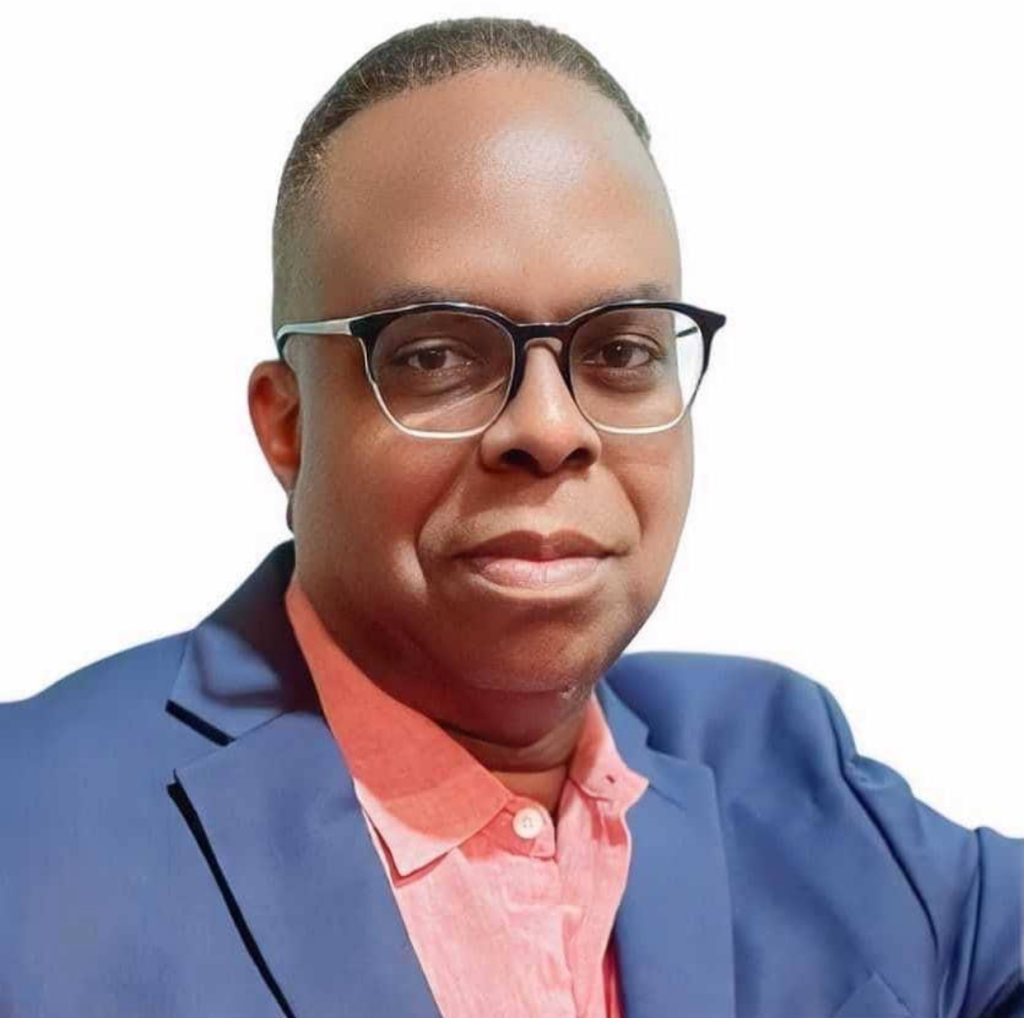
By Dr. Charles Orbih Paper Presented at the 10-Year Anniversary Celebration and 20th EBS/HIBC Colloquium Graduation, Induction, and Achievers Award Ceremony Abstract This paper critically examines the historical development of Silicon Valley as a center of technological innovation and its foundational role in the evolution of modern computing and Artificial Intelligence (AI). Through a detailed analysis of pioneering companies such as Intel, Hewlett-Packard, Oracle, Cisco Systems, and Sun Microsystems, as well as the later emergence of Google, Amazon, and Facebook, the study traces the region’s influence on shaping the global digital economy. Curled from an eyewitness account of the author, who was an active professional and resident of Silicon Valley during these formative years, particular emphasis is placed on the technological and organizational innovations that facilitated the transition from traditional enterprise systems to interconnected, data-driven infrastructures. The research further explores how the integration of AI, alongside advancements in cloud computing and the Internet of Things (IoT), has foreshadowed the onset of the Fourth Industrial Revolution (IR 4.0). By situating these developments within a broader socio-technical framework, the paper highlights the continuing impact of Silicon Valley’s innovation ecosystem on enterprise management, smart urban planning, and digital transformation strategies worldwide. The paper concludes by examining the implications of the proliferation of artificial intelligence technologies for emerging markets, with a particular focus on Nigeria. While still in its early stages, AI presents a significant opportunity for both government and private sector stakeholders to drive large-scale infrastructure development and innovation. An interview with Amos Tarfa (also known as The MathGuy) introduces a compelling vision of equipping one billion students with the tools to harness AI in mastering complex subjects such as calculus. This initiative highlights the transformative potential of integrating AI into educational systems— from K–12 through university levels—to position Nigeria’s young population for long-term growth and competitiveness in the global digital economy. Introduction Silicon Valley is synonymous with innovation, entrepreneurship, and technological breakthroughs. It has produced some of the most influential companies in the world, including Apple, HP, Sun Microsystems, Cisco Systems, Oracle, IBM, Network Appliance, Juniper Networks, 3Com, Novell, Silicon Graphics, Intel, and Microsoft. While these firms form the backbone of the global technology industry, their origins are far humbler than their billion-dollar valuations suggest. Many of these companies started in garages, dorm rooms, or small office spaces, driven by visionary entrepreneurs who challenged conventional thinking and embraced risk. The original Silicon Valley—encompassing San Jose, Santa Clara, Mountain View, 1Fremont, and San Mateo, California—became the epicenter of technological disruption, fueled by immigrant innovators and homegrown talent. Beyond these corporate titans, numerous smaller companies also began with similar ambitions, only to be acquired or merged into larger entities. Whether they remained independent or became part of bigger conglomerates, their contributions helped shape modern computing, networking, and software development. Artificial Intelligence (AI) is rapidly reshaping industries worldwide, offering unprecedented opportunities for innovation, efficiency, and accessibility. In Nigeria, AI’s integration into education and healthcare presents both immense potential and critical challenges, requiring a strategic approach to maximize its benefits for economic and societal development. By examining its historical evolution, key innovators, and AI-driven future, this paper explores how Silicon Valley remains the architect of the next technological frontier and its integration into education and healthcare in Nigeria. The Rise of Garage Startups and Technology Giants Acquisitions and Mergers: Expanding the Digital Landscape Several smaller companies introduced groundbreaking innovations before being acquired by larger corporations: A. 3Com (Founded in 1979) – Pioneered Ethernet networking, later acquired by HP in 2010. B. LoudCloud (Founded in 1999) – Founded by Marc Horowitz, Marc Andreessen (father of Netscape), and Tim Howes, later acquired as Opsware by HP. They are one of the pioneers of cloud computing. Introduced the concept of Data Privacy and Automation. C. Novell (Founded in 1979) – A leader in network operating systems, acquired by The Attachmate Group in 2011. D. Silicon Graphics (SGI) (Founded in 1982) – A pioneer in high-performance computing, merged with Rackable Systems in 2009. SGI was later acquired by Digital Equipment Corporation (DEC) which was later acquired by Michael Dell’s Dell Computers. E. Network Appliance (NetApp) (Founded in 1992) – A data storage company that struggled to compete with emerging cloud technologies. They engineered the adoption of large storage computing, a prelude to large capacity Data Centers, the backbone of Cloud Computing. Artificial Intelligence and the Future of Silicon Valley With Oracle acquiring Sun Microsystems and HP acquired Compaq, the race for control of cloud infrastructure intensified. Oracle leveraged the computing power and speed of Sun’s servers to strengthen its enterprise solutions, though cloud dominance would eventually be led by players like Amazon, Microsoft, and Google. At the turn of the century, the rise of Google, Facebook, and Amazon sparked a new wave of innovation, laying the foundation for the modern internet. As cloud computing matured, the integration of Artificial Intelligence (AI) accelerated, driving advancements in automation, data processing, and personalized experiences across digital platforms. Google (founded in 1998 in Menlo Park by Larry Page and Sergey Brin) started as a search engine with a focus on web browsing and advertising. Over the years, it has grown into a multinational corporation, expanding its reach through acquisitions and innovations. Today, Google encompasses a diverse portfolio, including YouTube, Google AI (Gemini), Fitbit, Google Chrome, Android, and the Pixel product line. Facebook (founded in 2004 as TheFacebook) began as a social networking platform for Harvard students. Created by a hoodie-wearing college student, Mark Zuckerberg, it quickly expanded beyond universities to become a global social media powerhouse. Now rebranded as Meta, the company dominates the digital landscape through strategic acquisitions, including Instagram, WhatsApp, and Oculus VR, solidifying its position as the most influential social media conglomerate in the world. Over the past decade, Silicon Valley innovators have led the charge in advancing Artificial Intelligence (AI) and driving global adoption. Through the concept of Digital Transformation, they have influenced governments worldwide, positioning Industrial Revolution 4.0 (IR 4.0) as the inevitable future. John Chambers, former CEO